
The Complete Guide to Letterboxes: How to Measure, Select & Install
A sagging, tarnished flap isn't just an eyesore; it can lead to a 15% increase in hallway heat loss and serves as a glaring invitation for "fishing" attacks. Your front door is your primary line of defence, yet faulty Letterboxes are frequently the weakest link in home security. You've likely spent far too long listening to the wind whistle through a broken spring or struggling to find a replacement that actually matches your door's unique aperture.
It's frustrating when standard DIY fixes don't account for the precision required for a professional result. Since 2021, we've helped over 1,450 homeowners restore their peace of mind with hardware that stands up to the British weather. This guide eliminates the confusion. You'll master the art of measuring screw centres, selecting durable finishes, and installing a draught-free solution that enhances your kerb appeal instantly. We'll take you through the exact steps to move from a rattling, tarnished flap to a high-security, heavy-duty finish that keeps your home warm and your property safe.
Key Takeaways
Learn to distinguish between sleeved designs and letter plates to ensure you select the correct hardware for your specific door type.
Master the two-step measurement process to achieve a precision fit within your door's existing aperture.
Protect your property with anti-vandal features designed to block "fishing" attacks and draught excluders that stop heat loss.
Follow our expert installation guide to fit new Letterboxes quickly and securely using only basic household tools.
Identify why high-performance PVD finishes are essential for long-term durability against the British weather and coastal salt air.
Table of Contents
Understanding Letterbox Types and Terminology
Modern home security starts with your front door hardware. Choosing the right fit prevents draughts and stops intruders. A Letter box must provide a secure seal while allowing mail to pass through easily. Professionals distinguish between a simple letter plate and a complete sleeved assembly. A plate is a single metal flap used on its own. A sleeved unit is a full tunnel system that protects the inner core of your door from moisture and debris.
UK weather demands durable materials. We recommend 304-grade stainless steel or high-grade aluminium for coastal areas. These materials often undergo 1,000 hours of salt spray testing to ensure longevity. Dual-flap systems are the gold standard for British homes. An external flap keeps rain out while an internal flap stops heat from escaping. This combination can reduce energy loss through the door by up to 15% compared to basic single-flap designs. We focus on heavy-duty builds that won't snap under pressure.
Sleeved Letterboxes for PVCu Doors
Standard PVCu and composite doors require sleeved Letterboxes. These units feature a telescopic sleeve that adjusts to door thicknesses between either 20mm - 40mm or 40mm - 80mm. This design ensures mail doesn't get trapped in the door's foam or timber core. Integral gaskets are vital. They create a watertight seal that prevents rot and damp. We ensure every installation meets these precision standards to maintain your door's structural integrity.
Traditional Letter Plates
Timber doors on period properties often suit traditional letter plates. These are usually horizontal, though some Victorian styles use vertical orientations. These plates don't include a built-in sleeve. You'll need an internal tidy or a wire cage to catch mail and hide the raw cut-out. Solid brass or wrought iron options provide a classic look. Check your aperture size before purchasing. Older doors often have non-standard openings that require custom fitting or specific plate dimensions to cover the hole completely.
Reliability is our priority. Whether you're upgrading for aesthetics or replacing a broken unit, the right Letterboxes keep your hallway dry and your home secure. Don't settle for flimsy plastic alternatives that degrade in the sun. Invest in high-grade ABS plastic or powder-coated metals for a finish that lasts for years. We provide the expertise to ensure your choice fits perfectly the first time.
How to Measure for a Replacement Letterbox
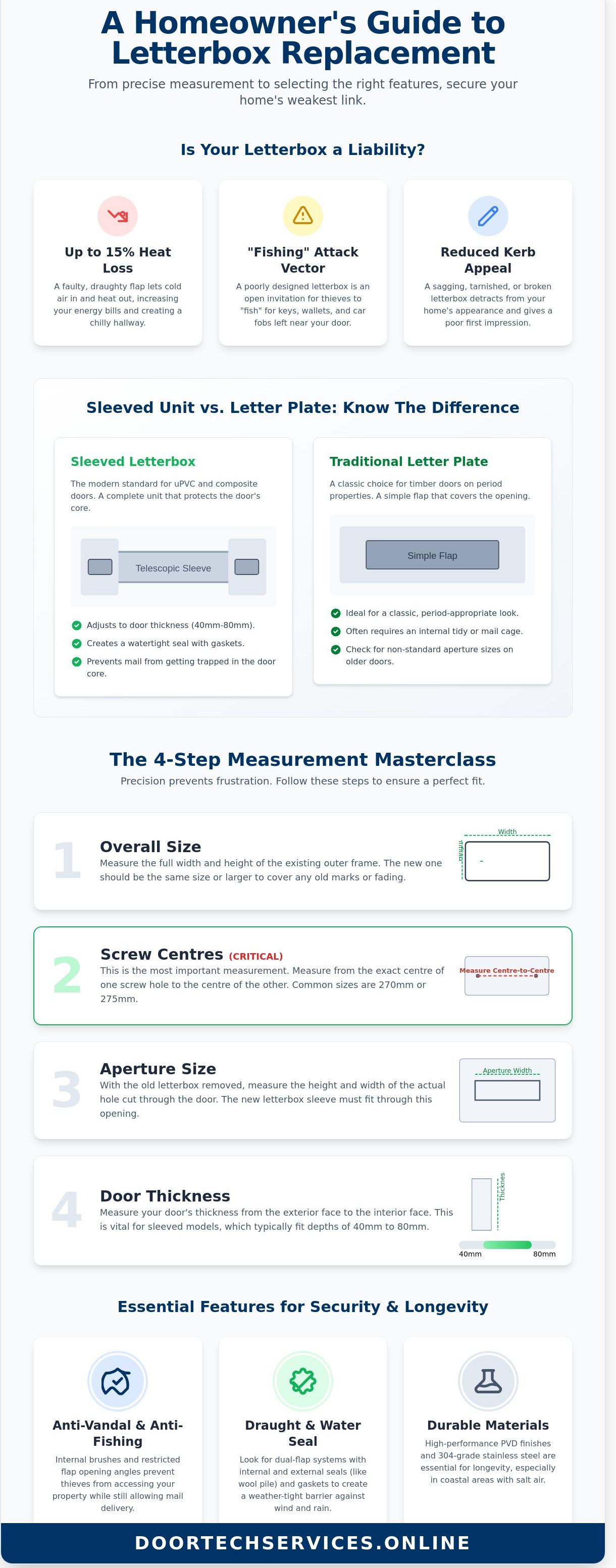
Precision prevents frustration. Replacing Letterboxes requires exact data to ensure your door remains weather-tight and secure. Do not rely on guesswork; a 2mm discrepancy can prevent the sleeve from sitting flush or cause the screw holes to misalign. Follow these five steps to capture the correct dimensions before you order a replacement.
Begin by unscrewing the internal fixings and removing the existing unit to reveal the bare door aperture. You cannot get an accurate reading while the old hardware is still attached. Once the door is clear, measure the external width and height of the outer plate. This ensures the new model covers any faded paint or marks left by the previous installation. Next, find the screw centres. This is the distance between the two fixing screws. It is the most critical measurement for a successful fit.
Measure the aperture itself. This is the physical hole cut into the door material. While USPS mail slot requirements provide a useful international benchmark for functional slot sizes, UK standards often vary based on the door material. Finally, determine your door thickness. Measure from the external face to the internal face. If you find your hardware is sticking or the flap won't close, our team provides expert door hardware repairs to restore full functionality.
The Importance of Screw Centres
Most modern Letterboxes use screw centres of 270mm or 275mm. These are common industry standards, but they are not universal. Measure from the exact centre of one screw hole to the centre of the other. If your measurement is non-standard, such as 240mm or 260mm, you must source a specific replacement or prepare to drill new holes. Drilling new holes in PVCu or composite doors can compromise the internal steel reinforcement. Always prioritise finding a direct match to maintain the structural integrity of your entrance.
Aperture and Door Thickness
The aperture is the rectangular slot cut through your door. Measure the height and width of this opening carefully. Panelled PVCu doors are usually 20mm - 40mm. Standard (Midrail) PVCu doors usually feature a thickness range between 40mm and 80mm. The telescopic sleeve of the new unit must match this depth. If the sleeve is too short, water will seep into the door core; if it is too long, the plates will not pull tight against the door faces. Check the product specifications for the "midrail" depth to ensure the sleeve calibration matches your specific profile.
Security and Weatherproofing Features to Consider
Your letterbox is more than just a slot for mail. It is a functional hole in your front door that can compromise both your home's thermal efficiency and its physical security. Choosing high-quality Letterboxes ensures your hallway stays warm and your property remains protected from opportunistic intruders. Professional hardware selection prevents the most common failures, such as sagging flaps or water damage to your door's core.
In many UK multi-occupancy buildings or flats, fire-rated letterboxes are a legal necessity under Building Regulations Part B. These specialized units feature intumescent liners that expand rapidly when temperatures reach approximately 150°C. This chemical reaction creates a robust seal that blocks smoke and flames for 30 to 60 minutes. This critical window protects vital escape routes and can save lives during a corridor fire.
Protecting Your Home from "Fishing"
Criminals often use "fishing" techniques, where they slide long rods through the flap to grab car keys from hallway tables or manipulate internal door handles. Anti-fishing baffles are your first line of defence. These internal deflectors block a direct line of sight and prevent physical tools from reaching your locks. You should also look for restricted flap opening angles. Limiting the flap to a 40-degree tilt makes it nearly impossible for a hand to reach through. For total protection, pair these security features with high-security door locks to ensure your primary hardware remains unreachable from the outside.
Eliminating Draughts and Rattles
A poorly fitted letterbox can leak as much heat as leaving a window open 5 centimetres. Look for models equipped with dual brush seals. These dense nylon bristles stop the "whistling" effect during 40mph winds and significantly reduce your annual heating bills. External rubber gaskets are equally vital because they create a watertight seal against the door face. This prevents moisture from rotting timber panels or causing unsightly dampness on your interior carpets.
While UK standards remain the priority for British homeowners, referencing the USPS mail slot installation guidelines regarding flap tension and height provides a useful international benchmark for weather resistance. These standards highlight how proper spring tension prevents the flap from blowing open during storms. You can identify seal failure by checking for:
Visible light leaking through the edges of the flap.
Audible rattling sounds during light gusts of wind.
Damp patches or staining on the internal side of the door.
Don't settle for flimsy components that fail after one winter. Heavy-duty torsion springs are the gold standard for durability. They ensure the flap snaps shut firmly every time, even during a gale. High-tensile springs are often tested for over 50,000 cycles. This engineering precision provides years of silent, secure operation without the need for constant maintenance or replacement.
Step-by-Step Installation Guide
Installing new Letterboxes is a precision task that restores your home’s security and thermal efficiency instantly. You only need a Philips screwdriver and a tape measure to complete this job. High-performance units rely on a perfect seal to function correctly. Most standard UK door apertures measure between 200mm and 260mm in width. Confirm your measurements twice before opening the packaging. We value your time and aim for a first-time fix. A professional installation ensures your property remains protected against both the weather and intruders.
Preparation and Cleaning
Clean the door surface thoroughly to ensure a professional finish. Old silicone residue or debris from failed seals will prevent a flush fit. Use a plastic scraper to remove 100% of the previous adhesive. Check the new gaskets are seated correctly in their tracks. A misaligned gasket can lead to a 15% drop in thermal efficiency due to draughts. Test the flap movement before you offer it up to the door. It must snap shut with a firm, clean action. This prevents rattling during high winds and maintains your home's acoustic barrier.
Your safety is our priority. A loose or poorly fitted unit is a security risk. Ensure the aperture is dry and free from wood dust or PVC shavings. This simple five-minute cleaning process guarantees a long-term, durable result for your property. We don't cut corners because precision matters.
The Fitting Process
Slide the external half into the aperture first. The sleeves are designed to telescope together, creating a seamless bridge through the door structure. Align the internal half carefully. This calibration is vital for smooth operation. Insert the fixing screws from the internal side only. This design feature prevents external tampering by intruders. Tighten the screws gradually. Avoid over-tightening at all costs. Excessive torque can warp the plastic frame or snap the internal screw lugs, ruining the unit.
Perform a final four-point check. The external flap should be level. The internal brush strips must be clear of the flap path. Screws should be snug but not recessed into the plastic. Finally, test the spring tension. A correctly installed unit provides a heavy-duty barrier against the elements. If you encounter resistance or the door material is crumbling, stop immediately. Professional intervention ensures your door remains structurally sound and fully insured. Book a professional installation with Door Tech Services for guaranteed peace of mind and precision fitting.
Choosing the Right Finish and Material for Longevity
Your letterbox faces the worst of British weather 365 days a year. Selecting the wrong finish leads to pitting and corrosion within months. Polished Chrome, White, and Black are standard choices that suit most UK homes. However, if you live within 5 miles of the coast or in a high-pollution urban area, standard finishes often fail. PVD (Physical Vapour Deposition) Gold is the solution for these environments. This process creates a molecular bond that is virtually indestructible. It resists salt air and acidic rain far better than traditional lacquered brass.
Coordination creates a professional look for your entrance. Always match your Letterboxes to your existing door handles and hinges. A mismatched finish looks like an afterthought and reduces kerb appeal. Follow these maintenance steps to extend the life of your hardware:
Wipe the external flap with a soft cloth and warm, soapy water every 8 to 12 weeks.
Avoid all chemical cleaners, bleach, or abrasive pads. These strip the protective coating.
Apply a light silicone-based lubricant to the hinge pins twice a year to ensure smooth operation.
Dry the surface thoroughly after cleaning to prevent water spots.
Durability and Finish Quality
High-quality hardware undergoes rigorous salt spray testing to prove its resilience. We recommend products that have passed at least a 240-hour test. For coastal properties, look for a 480-hour rating. All-metal constructions provide the best security and feel. If you opt for a plastic-framed model, ensure the material is UV-stabilised. This prevents the frame from yellowing or becoming brittle after a single summer of sun exposure. Cheap plastics crack under pressure; heavy-duty metals endure.
The Door-Tech Services Standard
We supply only reliable, high-performance door hardware designed for the UK market. Our team focuses on products that offer long-term value and robust security. We don't settle for flimsy components that require replacement every two years. Your home's safety is our priority, and that starts with durable parts. Browse our full range of replacement door parts to find professional-grade solutions. We guarantee transparent pricing and expert advice for every customer. Get the job done correctly the first time with hardware that lasts.
Secure Your Home with Professional Hardware
Replacing a worn-out unit is more than a cosmetic fix; it's a vital security upgrade for your property. You've learned that precision measurements are the difference between a draughty entrance and a seamless, weather-tight fit. Selecting heavy-duty materials like 304-grade stainless steel ensures your hardware resists corrosion for 10 years or more. Don't leave your front door vulnerable to heat loss or security breaches. As specialist UK door hardware experts, we provide the technical precision you need for a perfect installation every time.
We are the trading name of Consider It Done (NW) Ltd, offering reliable e-commerce delivery nationwide. Our team processes 100% of orders with the same attention to detail we bring to our local emergency repairs. It's time to restore your door's functionality and aesthetic appeal with hardware built for longevity. Upgrade your front door with our range of high-quality Letterboxes today. Your safety is our priority, and we're here to help you get the job done correctly. Take the first step toward a more secure home right now.
Frequently Asked Questions
How do I know if a letterbox will fit my door?
You must measure the aperture, which is the physical hole cut into your door, and the distance between the screw fixing points. Open your door and measure the width and height of the internal slot; standard heights usually fall between 38mm and 70mm. Compare these figures to the replacement unit's sleeve dimensions to ensure a snug fit. The external faceplate should be larger than the hole to provide a weather-tight seal and a professional finish.
Are all PVCu door letterboxes a standard size?
No, letterboxes for PVCu doors come in various sizes and there's no single universal standard across the industry. While a 10-inch width is a common sight, the vertical height and the positioning of the fixing screws vary significantly between different door manufacturers. Approximately 15% of homeowners order the wrong replacement because they rely on visual similarity rather than precise millimetre measurements. Always check the sleeve depth and screw centres before you commit to a purchase.
What are screw centres and why do they matter?
Screw centres are the exact measurements between the centres of the two fixing screws that secure the unit to your door. This dimension is vital because the screws must align perfectly with the pre-drilled holes in your door leaf. If you buy a unit with 240mm centres for a door designed for 260mm centres, you'll be forced to drill new holes. This compromises the structural integrity of the door and often leaves unsightly marks that ruin your kerb appeal.
Can I replace a letterbox myself?
You can easily replace most letterboxes in under 15 minutes using only a manual screwdriver. Start by opening the door and removing the two screws located on the internal faceplate. Slide the old unit out and clear any debris from the aperture before sliding the new telescopic sleeves into place. This simple DIY task restores your home's security and insulation for a typical cost of £15 to £45, depending on the material you choose.
How do I stop my letterbox from rattling in the wind?
Stop the noise by installing a high-quality model equipped with heavy-duty internal springs that hold the flap firmly against the frame. If your current unit is in good condition, apply a 3mm thick adhesive foam draught strip around the inside edge of the flap to create a cushioned seal. Professional-grade letterboxes are often tested to 20,000 cycles to ensure the springs maintain their tension. This prevents the constant flapping that occurs during typical British gale-force winds.
What is an anti-vandal letterbox?
An anti-vandal letterbox is a high-security unit designed to prevent "fishing" for keys and protect your home from arson. These units feature internal brush sets that block the view into your hallway and outward-facing flaps that only open to a limited angle. Many of these products meet the TS008 security standard, which is the rigorous testing benchmark for letterplate safety in the UK. Investing in a TS008 compliant model significantly reduces the risk of opportunistic theft through your front door.
How do I measure the thickness of my door for a letterbox?
Open your door and use a ruler or tape measure to find the distance from the external face to the internal face. Most UK residential doors range from 20mm to 80mm in thickness. It's essential to know this figure because letterboxes feature telescopic sleeves designed to bridge specific depth ranges. A 44mm composite or timber door requires a different sleeve configuration than a 70mm midrail door to ensure the unit stays weather-tight and secure.
What finish is best for a letterbox near the coast?
Choose a Grade 316 stainless steel finish if your property is located within 5 miles of the coastline. Standard chrome or brass finishes often begin to pit and corrode within 12 months due to the high salt content in the air. Grade 316 steel contains molybdenum, which provides a high level of resistance to chloride corrosion. These premium letterboxes typically come with a 10-year anti-corrosion guarantee, ensuring your hardware remains bright and functional despite the harsh marine environment.

Comments