
Glazing Films for Security, Safety, Privacy and Heat Reduction: The 2026 Expert Guide
According to the Office for National Statistics, nearly 70% of residential burglaries in the UK involve intruders targeting windows or doors. It's a sobering figure that leaves many homeowners feeling vulnerable, especially when they lack Glazing Films for security, safety, privacy and heat reduction to reinforce their glass. You likely want to protect your property and lower those climbing energy bills, but the thought of replacing every double-glazed unit feels like a major financial burden you'd rather avoid.
You're right to look for a smarter alternative. Our 2026 guide explains how to transform your current windows into certified, high-performance barriers. We'll show you how to block up to 80% of solar heat and create a "one-way" privacy effect that stops prying eyes without losing your view. From understanding UK safety regulations to choosing the right hardware, this expert walkthrough gives you the technical precision needed to secure your home once and for all.
Key Takeaways
Save on renovation costs by learning why high-performance PET laminates offer a superior ROI compared to full double-glazing replacements.
Strengthen your property's defences with Glazing Films for security, safety, privacy and heat reduction that hold shattered glass in place during attempted break-ins.
Slash your annual energy bills by discovering how thermal regulation films significantly reduce the need for expensive air conditioning during British summers.
Ensure total window integrity by identifying why failing gaskets and weak locks can undermine even the most advanced security film upgrades.
Master the "cleanliness is godliness" rule to achieve a flawless, bubble-free application that guarantees long-term durability and professional results.
Table of Contents What are Glazing Films and How Do They Work? Security and Safety Films: Strengthening Your Property The Financial Case: Energy Savings and ROI The Hardware Connection: Why Gaskets and Locks Matter Practical Guide: Choosing and Maintaining Your Glazing Upgrades
What are Glazing Films and How Do They Work?
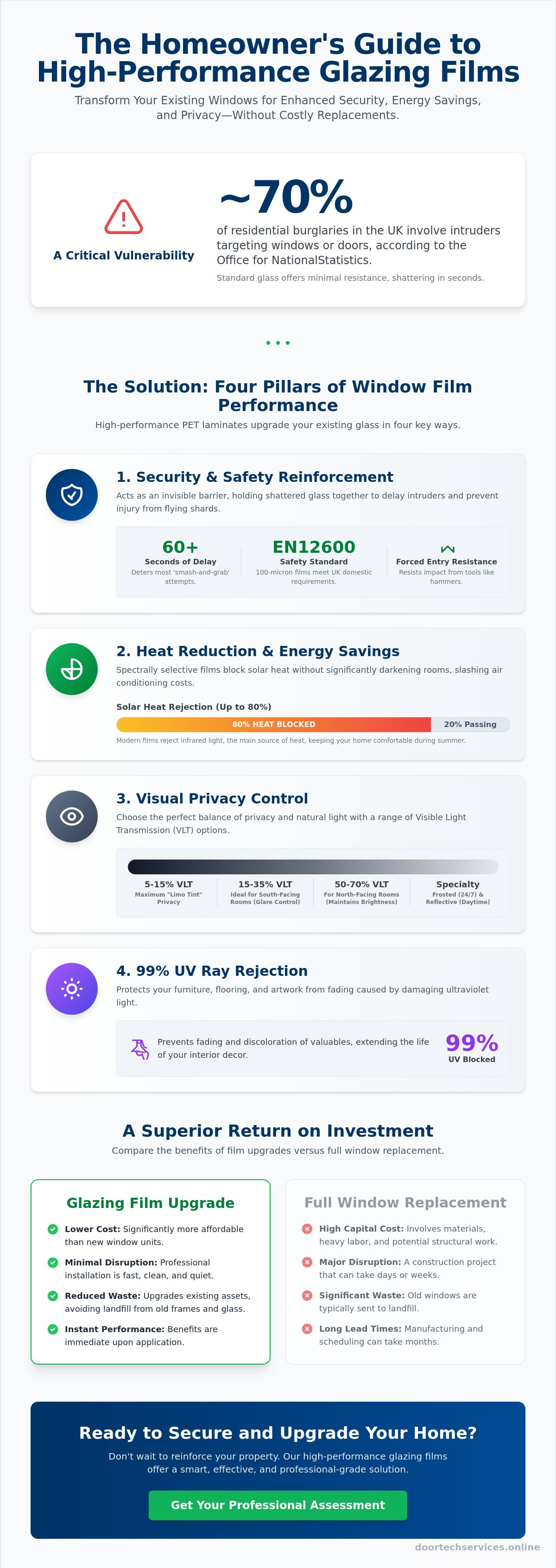
Glazing films are high-performance polyester (PET) laminates engineered to upgrade your existing windows. These multi-layered membranes bond directly to the glass surface, creating a protective barrier that stays intact even if the glass breaks. They provide four core benefits: impact resistance, thermal regulation, UV blocking, and visual privacy. By 2026, the UK market has shifted toward "dual laminate" technology. These advanced films combine security reinforcement with solar control in a single application. Choosing Glazing Films for security, safety, privacy and heat reduction is often more efficient than full glass replacement. It saves money; it reduces waste; it strengthens your perimeter without the disruption of a construction crew.
Modern Window film technology provides a cost-effective alternative to replacing entire glazing units in UK homes. Most residential glass installed before 2015 lacks the thermal efficiency required for today's energy standards. Instead of removing the frame, we apply a precision-cut film that upgrades the glass performance instantly. It's a professional-grade solution for homeowners who want to improve their property value and safety without the high price tag of new installations.
The Science of Solar Control and Heat Reduction
Solar control is measured by the Solar Heat Gain Coefficient (SHGC). This value represents the fraction of solar radiation admitted through a window. High-performance films reject up to 80% of infrared light, which is the primary cause of heat buildup in conservatories and south-facing rooms. While traditional tinted films rely on dark dyes to absorb heat, modern "spectrally selective" ceramic films use nano-technology to block heat while remaining virtually invisible. This allows you to keep your view while keeping your room cool. A single layer of 99% UV-rejection film prevents furniture, flooring, and artwork from fading due to sun exposure.
The precision required to develop and verify these nano-structured coatings is immense, often involving the use of high-resolution imaging to ensure quality. For those interested in the sophisticated equipment used to analyze such advanced materials, Electron Optics Instruments, LLC provides expert resources on scanning electron microscopes and their role in modern material science.
For homeowners who have invested in premium interior upgrades, such as the bespoke fitted wardrobes and custom cabinetry from Finest Furniture Studio, installing UV-rejection film is a critical step in preserving the finish and color of their woodwork for years to come.
Privacy vs. Light Transmission: Finding the Balance
Visible Light Transmission (VLT) determines how much natural light enters your room. A lower VLT percentage means a darker film. For example, a 5% VLT film offers maximum privacy and a "limo tint" look, while a 70% VLT film is nearly transparent. "One-way mirror" films use a reflective finish to provide daytime privacy, whereas frosted films are better for bathrooms or offices because they obscure vision 24/7 without blocking all light. Use this checklist to choose the right VLT for your UK home:
South-facing rooms: 15-35% VLT to combat intense glare and heat.
North-facing rooms: 50-70% VLT to maintain brightness while blocking UV rays.
Ground-floor bathrooms: Frosted or opaque films for total privacy.
Street-facing lounges: Dual-reflective films for daytime privacy with a clear view out.
We focus on precision application to ensure no bubbles or peeling. Your safety is our priority, and these films are a heavy-duty solution for modern living. Glazing Films for security, safety, privacy and heat reduction offer a seamless way to protect your family while lowering your monthly energy bills.
This commitment to safety and modern living often extends to other areas of the home; for those requiring specialized assistance to maintain their independence, etechmotion.co.uk provides advanced electric wheelchairs designed with the same emphasis on reliability and high-performance engineering.
Security and Safety Films: Strengthening Your Property
Your windows are the weakest point of your property's perimeter. Standard glass shatters in seconds under pressure. Security film acts as a transparent safety net. It bonds directly to the glass surface. When impacted, the glass breaks but stays held firmly within the film's structure. This prevents shards from flying inward. It protects your family from severe lacerations. It also stops burglars from stepping through a broken pane. A typical 'smash and grab' attempt relies on speed. Most intruders abandon their attempt if they can't gain entry within 60 seconds. High-performance Glazing Films for security, safety, privacy and heat reduction provide that critical delay. For those seeking high-quality safety features in other areas, you can explore Stainless steel handrails as an example of the heavy-duty fabrication required for total property security.
It is vital to distinguish between safety and security. Safety film focuses on preventing accidental injury. It ensures that if a child runs into a glass door, the shards don't cause harm. Security film is designed to prevent forced entry. It resists sustained physical attacks from hammers or crowbars. For maximum protection, we recommend edge-retention systems. These systems anchor the film to the window frame using a structural silicone sealant. This ensures the entire glass pane cannot be pushed out of the frame by force. We use precision tools to ensure every installation is seamless and heavy-duty, much like the structural solutions provided by مصنع الشرق الصناعي for aluminum and iron fortifications.
Understanding Micron Thickness and EN12600 Standards
Micron refers to the thickness of the film. A 100-micron film provides basic safety. It meets the EN12600 (formerly BS6206) Class 2B2 standard required for many UK domestic installations. For high-security needs, you should look at 300-micron film or higher. In the UK, 175-micron film is the residential sweet spot. It offers a balance of heavy-duty tensile strength and optical clarity. It's thick enough to resist repeated blows but remains nearly invisible to the naked eye. Our technicians ensure every application meets certified impact resistance levels.
Bomb Blast and Extreme Impact Protection
Commercial sites and high-risk areas require specialist blast-mitigation films. These films are constructed from multiple micro-layers of polyester. This cross-laminated layering increases tensile strength by up to 40 percent compared to single-layer films of the same thickness. In the event of an explosion or extreme weather, these films hold the glass together against high-pressure waves. They turn fragile glass into a resilient barrier against flying debris. Our team can help you secure your entry points with the right specification for your building's risk profile. Installing professional Glazing Films for security, safety, privacy and heat reduction is a proactive step for any property owner looking for long-term value and peace of mind.
In addition to blast-mitigation films, commercial property managers should consider other essential safety measures. Specialist passive fire protection, such as the cavity fire barriers offered by nationalfireltd.co.uk, plays a crucial role in containing fire and smoke within building structures, providing an extra layer of protection beyond the glass.
The Financial Case: Energy Savings and ROI
Upgrading your property's thermal performance doesn't always require a total window overhaul. Installing new low-E double glazing units can cost upwards of £600 per window when you factor in professional labour and frame disposal. Professional application of Glazing Films for security, safety, privacy and heat reduction offers a high-performance alternative at approximately 10% to 20% of the cost of full glass replacement. It's a strategic investment that preserves your existing infrastructure while delivering immediate utility savings.
While films are a cost-effective retrofit, homeowners who require a complete structural replacement can benefit from the durability and thermal efficiency of premium aluminium windows cumbria to ensure long-term property value.
The return on investment (ROI) is rapid. Commercial properties typically see a full return within 2 to 5 years due to large glass surface areas and high cooling demands. Residential homeowners usually reach the break-even point within 6 to 8 years. This timeline makes film one of the most cost-effective energy conservation measures available in the UK market today. For business owners in the hospitality sector who want to pair energy efficiency with high-quality interiors, learn more about TFSE Products Ltd and their professional food display equipment.
Window Film vs. Blinds and Curtains
Blinds and curtains are reactive solutions. They catch heat after it has already entered the building, creating a greenhouse pocket between the fabric and the glass. Films are proactive. They stop solar energy before it penetrates the interior. You don't have to deal with dust-collecting slats or heavy fabrics that require constant cleaning. You keep your view clear and your rooms bright while maintaining a cool, controlled environment—ideal for protecting handcrafted furniture like the dining tables from The Mensa Table Company. It's a maintenance-free solution that outlasts traditional window dressings by a decade.
Long-term Durability and Warranty Considerations
Cheap DIY films often bubble or peel within 24 months because of inferior glues. Professional-grade Glazing Films for security, safety, privacy and heat reduction use advanced pressure-sensitive adhesives that bond at a molecular level. This level of molecular engineering is often perfected through rigorous testing with equipment like the scanning electron microscopes from Electron Optics Instruments, LLC, which help researchers verify the structural integrity of advanced polymers and adhesives. Modern scratch-resistant coatings ensure the surface remains clear for 15 years or longer. Always check your existing window manufacturer's warranty before installation. Many professional installers provide a matching warranty to cover the glass if the original manufacturer's terms are affected by the film application. This ensures your protection remains comprehensive and your investment stays secure.
The Hardware Connection: Why Gaskets and Locks Matter
Glazing Films for security, safety, privacy and heat reduction act as a robust defensive skin for your glass. However, this protective layer is only as strong as the frame and hardware supporting it. We've seen many properties where premium film was applied to failing, brittle window frames. A high-tensile security film won't stop an intruder if the entire window sash can be pried open with a simple tool. True protection requires Total Window Integrity: the perfect combination of film, seal, and lock. If one component fails, your security is compromised, which is why sourcing quality components from providers like Stop Thief Security is essential for a complete security solution.
In high-security residential or industrial settings, achieving this integrity often involves integrating heavy-duty shutter systems or specialized architectural solutions. Companies like Sahara Doors & Metals LLC provide these robust physical barriers, which can be used alongside glazing films to create a formidable, multi-layered defense for any property.
Replacing Window Gaskets to Maximize Efficiency
A professional window seal repair is the ideal partner for solar control film. While heat-reduction film reflects external radiation, it cannot stop internal heat from escaping through a perished rubber seal. Worn gaskets are responsible for up to 15% of a home's heat loss through draughts. We recommend upgrading to Schlegel Q-Lon or high-performance bubble gaskets to eliminate these gaps. Check your windows for flattened rubber, visible daylight, or brittle sections before applying film. If you can feel a breeze when the window is closed, the thermal benefits of your film will be severely undermined.
Upgrading Locks and Handles for Security
Mechanical failure in your window hardware creates a vulnerability that film alone cannot fix. We often find that older uPVC windows have brittle handles or seized gearboxes that won't fully engage the locking points. Installing sash jammers provides an extra layer of physical resistance against leverage attacks, keeping the sash pinned to the frame. For glazed entry doors, high-security door furniture and TS007 3-star rated cylinders are essential. These cylinders prevent lock snapping, which is a primary entry method for burglars in the UK. Combining these mechanical upgrades with Glazing Films for security, safety, privacy and heat reduction ensures your entry points are physically reinforced against all common threats.
For professional contractors in the sector, staying visible to homeowners looking for these specialized security upgrades is essential, with many turning to Door & Gate Domination for expert digital marketing and growth strategies.
Don't leave your home's safety to chance. Book a professional security audit today to ensure your window hardware is as tough as your glazing film.
Practical Guide: Choosing and Maintaining Your Glazing Upgrades
Precision is the foundation of a successful installation. Start by measuring the visible glass area in millimetres. Don't include the gaskets or the frame in your base measurement. Record the width and height, then add a 20mm overlap to each dimension. This extra margin allows for precise trimming against the frame. If you're ordering Glazing Films for security, safety, privacy and heat reduction, accuracy ensures you don't end up with light gaps or wasted material.
Preparation determines the final result. Glass must be surgically clean. Use a professional glass scraper to remove paint flecks or grit. Follow this with a lint-free wipe and a soap-based slip solution. Even a microscopic speck of dust creates a permanent bubble under the film. Clean the frames too. Dust often falls from the top edge during the final squeegee pass, ruining an otherwise perfect finish.
Heavy-duty security films add physical weight to your glass. Before you apply any film, inspect your friction stays and hinges. If a window is already difficult to close or shows signs of sagging, the added mass will accelerate mechanical failure. Test the tension. Tighten or replace worn components to ensure the window remains functional and safe after the upgrade. For those who manage heavy-duty vehicles where mechanical integrity is equally critical, you can learn more about Truckparts Corner for professional-grade vehicle hardware.
DIY Application vs. Professional Supply
Successful DIY installation requires the right kit. You need a high-quality squeegee, a sharp retractable blade, and a concentrated slip solution. Standard household glass cleaners often contain chemicals that react with the film adhesive. For standard domestic windows, DIY is achievable. However, call a professional for large commercial atria or high-reach glazing. Always source UK-spec film that meets BS EN 12600 standards. Cheap imported alternatives often lack the UV stabilisers required to prevent bubbling and discolouration within 24 months. For those who take the same precision-led approach to their vehicle maintenance, topdon.no provides the advanced diagnostic tools and equipment needed to keep automotive systems in peak condition.
The Maintenance Checklist for 2026
Keep your windows in peak condition with this 5-point annual health check:
Gaskets: Check for shrinkage or cracks that allow water to sit against the film edge.
Hinges: Lubricate moving parts with a silicone-based spray to handle the film weight.
Locks: Ensure the locking points align perfectly without forcing the handle.
Film Edges: Inspect for lifting. Never use ammonia-based cleaners, as they dissolve the edge seal.
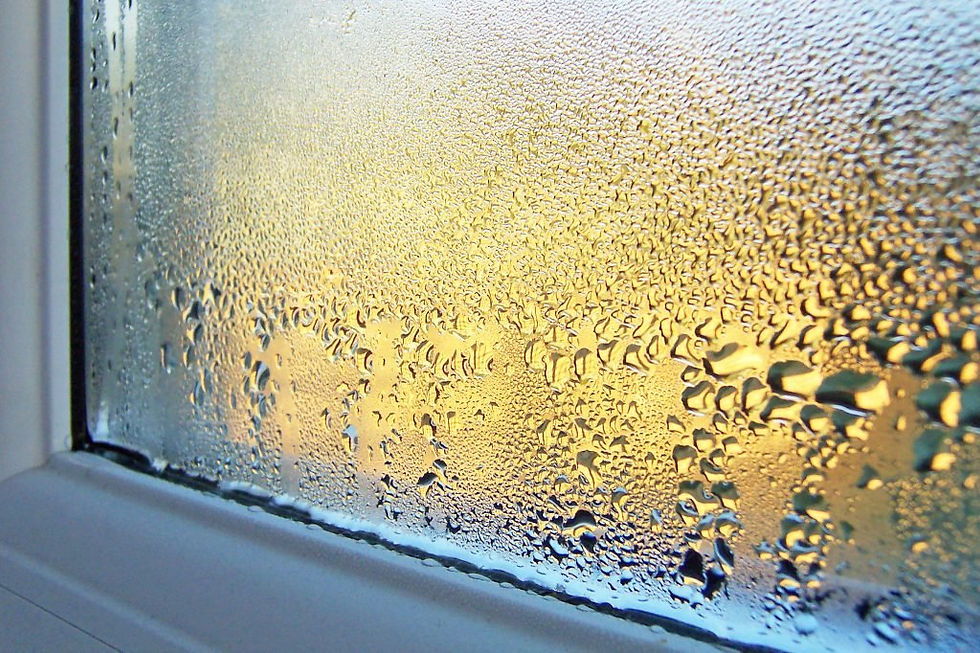
Seal Integrity: Look for internal misting.
Spotting seal failure is vital. If you see condensation between the panes, the unit's thermal seal has perished. Applying Glazing Films for security, safety, privacy and heat reduction to a blown unit is a waste of resources. The trapped moisture will eventually degrade the film adhesive from the inside out. Fix the glass unit before you enhance it. Upgrade your window hardware and seals today to ensure your glazing films perform at their peak for years to come.
Secure Your Property for 2026 and Beyond
Investing in Glazing Films for security, safety, privacy and heat reduction is a smart move for any UK property owner. High-performance films can block up to 80% of solar heat, providing a rapid return on investment through lower energy bills. However, a film is only as effective as the frame supporting it. You must ensure your window gaskets create a weatherproof seal and your locking mechanisms are fully operational. A compromised lock or a brittle gasket undermines your security and thermal efficiency, making a holistic approach to maintenance essential for long-term protection.
This holistic approach to protection should also extend to your vehicles; to ensure your car or van is just as secure as your home, you can learn more about Lock and Track for specialized security and monitoring services in the UK.
To extend this holistic approach to your electronic surveillance, check out Scaitec Security Solutions Ltd for expert advice on CCTV repairs and maintenance.
Don't leave your property's perimeter to chance. Browse High-Security Locks and Replacement Gaskets at Door-Tech Services to find the right hardware for your upgrade. As a specialist UK supplier of Euro cylinders and multipoint locks, we provide the heavy-duty components you need for total peace of mind. Our expert range of Schlegel Q-Lon and universal gaskets ensures a seamless fit for any profile. With national UK delivery on all window and door hardware, we help you get the job done right the first time. Your safety is our priority, and we're ready to help you fortify your home today.
Frequently Asked Questions
Is glazing film for security actually effective against burglars?
Security film is highly effective because it holds shattered glass in place during an attempted break-in. It doesn't make glass unbreakable, but it forces a burglar to strike the window repeatedly to gain entry. This delay often triggers alarms or alerts neighbours. Statistics show that increasing the time required to enter a property by just 60 seconds reduces the likelihood of a successful burglary.
Can I apply heat reduction film to double-glazed windows without causing thermal crack?
You can apply heat reduction film to double-glazed units if you select the correct film type. Applying high-absorption interior films can cause the temperature of the inner pane to rise by 40°C, creating thermal stress that leads to cracks. We recommend using external-grade films or dual-reflective products specifically tested for UK double-glazing. Professional installers use glass-to-film compatibility charts to ensure your windows remain safe.
How long does professional-grade window film last on UK homes?
Professional-grade window film typically lasts between 10 and 15 years on UK homes. Most manufacturers provide a 10-year warranty for internal applications to cover bubbling or peeling. External films face harsher conditions and usually require replacement after 5 to 7 years. Choosing a high-quality product ensures your home remains protected without the need for frequent maintenance or costly reapplications.
Will privacy film make my house too dark during the winter?
Privacy film won't make your house dark because modern products are designed for high light transmission. One-way mirror films allow up to 70% of natural light to enter your rooms. This is vital during the UK winter when daylight hours drop to just 8 per day in December. You get the privacy you need without sacrificing the bright, airy feel of your living space.
Does glazing film stop 100% of UV rays to prevent fading?
Most high-quality films block 99% of UV rays, but no product can stop 100% of fading. UV radiation accounts for 40% of the damage to your furniture and flooring. The rest is caused by visible light, heat, and humidity. Using Glazing Films for security, safety, privacy and heat reduction significantly slows down this process, preserving your interior decor for much longer than untreated glass.
Can I install glazing film myself or do I need a professional?
You should hire a professional to ensure the product performs as intended and qualifies for its warranty. DIY installations often result in trapped dust and bubbles that ruin the view and weaken the bond. When you choose professional Glazing Films for security, safety, privacy and heat reduction, you get a precision finish that lasts. This avoids the £150 average cost of replacing poorly applied film.
What is the difference between safety film and security film?
Safety film protects people from accidental glass breakage; security film is built to resist intentional attacks. Safety film usually measures 100 microns thick and meets BS EN 12600 standards for impact. Security film is much tougher, ranging from 175 to 350 microns in thickness. It's designed to keep the glass securely within the frame even under the pressure of a heavy-duty sledgehammer or crowbar.
How do I clean windows that have glazing film applied?
Clean your filmed windows using a soft microfibre cloth and a mild, ammonia-free detergent. You must wait 30 days after the initial installation for the adhesive to cure completely before the first wash. Don't use abrasive brushes or paper towels, as these cause micro-scratches on the surface. A simple squeegee and soapy water will keep the film looking transparent and professional for years to come.


Comments