
5 Modern Door Knocker Ideas to Transform Your Kerb Appeal in 2026
Updated: Jun 17
What if the only thing standing between your home and a premium 2026 aesthetic is a single, poorly installed piece of hardware? Most homeowners invest thousands in a new entrance only to settle for a generic door knocker that pits and corrodes after just one wet British winter. You want a front door that reflects your style while maintaining its structural integrity. We understand that the fear of drilling into a modern composite frame is real, and the frustration of mismatched metal finishes can quickly ruin a first impression.
Our expert guide provides the technical precision needed to transform your kerb appeal without the risk of permanent damage or loose fittings. We promise to help you select high-quality hardware that withstands the elements and stays rattle-free for years to come. You will gain the confidence to choose durable materials that offer long-term value and a seamless match for your existing letterbox and handles.
This article explores five standout design trends for the year ahead and details the essential steps for a secure, professional installation on any UK door type. As you plan your home's 2026 aesthetic, you may also learn more about how slimline bifolding doors can maximise natural light and capture stunning views to complement your new entrance.
Key Takeaways
Learn how high-quality door furniture enhances kerb appeal while acting as a sturdy, tactile deterrent for your property.
Discover the five most popular door knocker styles for 2026, including minimalist rings and slimline urn designs tailored for modern PVCu panels and composite doors.
Master the technical requirements for your specific door material, ensuring a secure installation using the correct bolt-through or face-fixing methods.
Create a professional "Door Suite" by coordinating hardware finishes and spacing to achieve a seamless, high-end look.
Protect your investment by choosing PVD finishes engineered to withstand the harsh UK climate and resist corrosion in coastal areas.
Extend your commitment to durability beyond the front door by partnering with Cleveland Fencing Ltd for professional garden and boundary improvements.
Table of Contents
The First Impression: Why Your Choice of Door Knocker Matters
Your front door acts as the handshake of your home. It's the first thing a visitor interacts with and the primary focal point for anyone passing by. A 2024 study by the HomeOwners Alliance revealed that high-quality kerb appeal can increase a property's market value by up to 10 per cent. The door knocker serves as the visual anchor of this space. It sets an immediate tone of reliability and attention to detail. When you choose professional-grade hardware, you aren't just decorating; you're making a statement about the security and maintenance of the entire building. For those looking to add a truly custom flair to their property, 2d6 Designs offers innovative 3D-printed solutions for home improvement and unique gifts that make a lasting impression. For those looking to extend this commitment to quality into their interior spaces, check out Nicholas Wells Antiques for a curated collection of rare furniture that perfectly suits the English town and country house aesthetic.
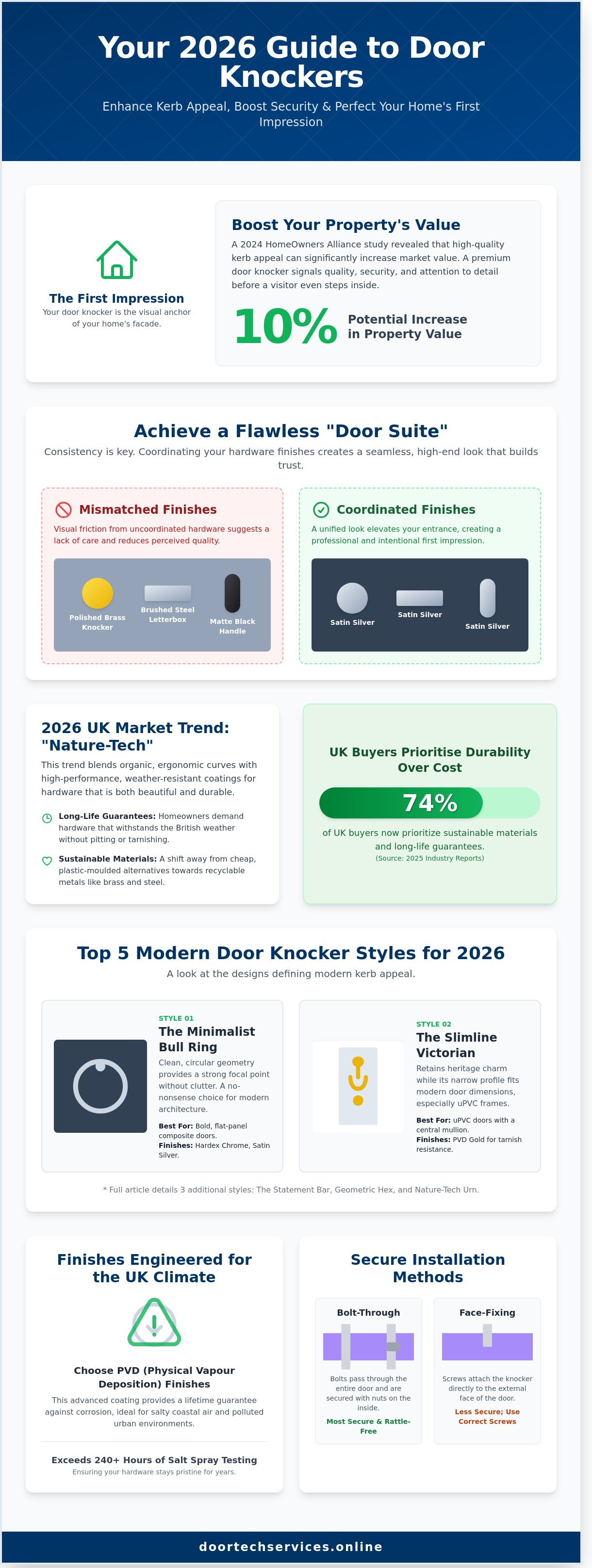
Choosing the right hardware involves more than just picking a finish. While The history of the door knocker shows we've relied on these tools for centuries, 2026 marks a definitive shift in UK design. Homeowners are moving away from the ornate, heavy-scrolled "Doctor" styles of the 1800s toward sleek, minimalist bars and geometric shapes. This evolution is driven by the "Door Suite" concept. Your knocker must communicate seamlessly with your handles, letterbox, and even your house numbers. If your handle is brushed steel but your knocker is polished chrome, the visual friction suggests a lack of care. Consistency builds trust before you even open the door.
Beyond Aesthetics: The Practical Role of Door Hardware
Electronics fail, but a solid piece of brass or steel is permanent. A sturdy door knocker provides a battery-free, reliable way for visitors to announce themselves when smart doorbells lose connection. The "heft" of the metal matters. A heavy strike produces a low-frequency sound that carries through solid timber or composite cores more effectively than a digital chime. This tactile feedback also acts as a subtle security deterrent. It signals that the homeowner invests in high-quality, heavy-duty protection. Accessibility is equally vital. Modern 2026 designs now feature larger striking plates and ergonomic grips. These ensure visitors with limited dexterity can use them without strain.
The UK Market Trends for 2026
The UK market is currently embracing "Nature-Tech" designs. This trend blends organic, ergonomic curves with high-performance, weather-resistant coatings. Data from 2025 industry reports shows that 74 per cent of UK buyers now prioritise sustainable materials and long-life guarantees over cheaper, plastic-moulded alternatives. We're seeing a surge in demand for PVD (Physical Vapour Deposition) finishes. These provide a lifetime guarantee against corrosion in salty coastal air or polluted urban environments. People want hardware that survives the British weather without pitting or tarnishing. Cheap components are a liability; professional-grade hardware is an investment in your home's long-term security. Just as quality hardware protects your entrance, a high-performance awning can safeguard your outdoor comfort; for a premium addition to your property, explore G-2000 Terrassemarkise to see how motorized sun protection can complement your 2026 home upgrades.
5 Modern Door Knocker Styles to Elevate Your Kerb Appeal
Choosing the right hardware is a matter of precision and long-term value. Your front door serves as the primary barrier of your home, and its aesthetic components must match its structural integrity. A high-quality door knocker does more than announce a guest; it signals the quality of the property behind it. For homeowners in the UK, selecting a style that resists the elements is essential for maintaining a professional look year-round. We see a shift toward heavy-duty materials that balance visual impact with mechanical reliability. This commitment to a professional aesthetic is also vital for commercial properties, particularly in the hospitality sector where first impressions are everything; for businesses looking to upgrade their service areas, you can learn more about high-quality food display and catering equipment from specialist UK manufacturers like TFSE Products Ltd. Beyond the hospitality sector, maintaining a professional visual presence at trade shows and events is equally crucial; for those seeking high-quality lightboxes and tension fabric systems, Coker Exhibition Systems Ltd (CokerExpo) provides specialist display solutions that help brands stand out with clarity and style.
Style 1: The Minimalist Bull Ring
This design focuses on circular geometry and clean lines. It suits bold, flat-panel composite doors perfectly, especially those finished in dark shades like Anthracite Grey (RAL 7016). The circular shape provides a strong focal point without cluttering the door face. Opt for a Hardex Chrome or Satin Silver finish. These materials offer superior durability against corrosion, ensuring the hardware remains pristine through 2026 and beyond. It is a no-nonsense choice for modern architecture.
Style 2: The Slimline Victorian
Traditional PVCu doors often feature a central mullion with limited space. The slimline Victorian knocker retains heritage charm while adhering to modern door dimensions; to complete this look, you can explore Heritage Doors from Windows in the Dales for a high-performance entrance that maintains a traditional feel.
Style 3: The Statement Animal Knocker
Homeowners seeking a signature look often choose stylised animals like bees, hares, or lions. These modern, abstract interpretations add instant character to cottage-style doors. This trend draws inspiration from long-standing traditions, such as a historical example from the British Museum which showcases how animal motifs have defined entrances for centuries. Use Antique Black or Textured Bronze for a heavy-duty feel that stands out against lighter timber finishes.
Beyond these three, the Geometric Bar is gaining traction for industrial-inspired homes. These vertical bars complement modern aluminium doors and grey composite panels. For a truly seamless look, the Hidden Fix Ingot uses a solid block design to conceal all screws. This creates a floating effect that highlights the precision of the installation. If your current hardware is loose or failing, you can book a secure hardware installation to restore your home entrance quickly. We focus on durability and ensure every fitting is calibrated for a perfect strike every time. Our technicians arrive on time with the right tools to get the job done correctly the first time.
Technical Compatibility: Matching Your Knocker to Your Door Type
Choosing a door knocker involves more than just aesthetics. You must ensure the hardware matches the structural integrity of your entrance. A heavy-duty solid brass knocker can weigh upwards of 1.5kg. This constant weight puts stress on your door hinges and internal core. Before you buy, identify your door material. Modern PVCu, composite, timber, and aluminium doors all require different installation approaches to maintain security and weatherproofing. Precision matters here. A misaligned hole ruins a £1,500 composite door instantly. This emphasis on material quality and technical precision is also a hallmark of fine interior design; for instance, Nicholas Wells Antiques provides an expert guide on the history and placement of antique centre tables, which often serve as the focal point for high-end entryways.
British weather is relentless. Driving rain easily penetrates poorly sealed fixing holes. This leads to internal rot in timber or hardware corrosion in composite cores. Always use rubber gaskets or a small amount of external-grade silicone during installation. This simple step prevents water ingress. It protects your 10-year door warranty. We see many homeowners skip this, leading to expensive repairs later. Do it right the first time to ensure long-term durability. This focus on weatherproofing and durability is just as important for your garden boundaries; Cleveland Fencing Ltd specialises in professional fencing and garden improvements designed to withstand the harsh UK climate.
Fixing Methods Explained
Bolt-Through is the most secure method. You drill two holes, usually 10mm in diameter, completely through the door. High-strength bolts then secure the hardware from the inside. It is the gold standard for security. Face-Fix methods use screws that drive directly into the front of the door. This is ideal for PVCu profiles with internal reinforcement. It avoids piercing the internal thermal break. Slim-Fix options use specialist brackets for narrow frames. These are common on modern aluminium sets where space is limited.
Material-Specific Advice
PVCu Doors: Look for hardware with "Hardex" finishes. These coatings undergo 240 hours of neutral salt spray testing. This prevents the common pitting and bubbling seen on cheaper chrome alternatives. Ensure your screws bite into the internal galvanised steel frame for a firm grip.
Composite Doors: These doors generally feature a Glass Reinforced Plastic (GRP) skin. Use high-speed steel drill bits to avoid splintering the surface. Never overtighten bolts. Excessive pressure can crush the insulating foam core and cause the door to bow.
Timber Doors: Natural wood expands and contracts with the seasons. Solid brass or cast iron is the best choice here. These materials offer the durability needed for organic movement. Always pre-drill pilot holes to prevent the wood from splitting along the grain.
Correct selection of your hardware ensures a seamless fit. Your door knocker should feel solid and sound crisp. If the door feels flimsy, consider a lighter aluminium model. Heavy-duty cast iron is better suited for 44mm thick solid oak doors. Check your door thickness before ordering. Standard UK bolts usually cover 40mm to 70mm, but bespoke timber doors may require longer fixings. We guarantee that matching the right fixing to the right material prevents mechanical failure. This level of technical precision and material quality is equally important for your interior; Finest Furniture Studio provides bespoke fitted furniture and custom wardrobe solutions that ensure every room is as well-crafted as your entrance.
The Perfect Pairing: Coordinating Your Knocker with Letterboxes and Handles
A door suite is a collection of hardware that works together to create a unified aesthetic. You shouldn't treat your door knocker as an isolated purchase. If your knocker is polished brass but your handle is brushed steel, the front of your home will look disjointed and unfinished. Achieving a professional finish requires matching every element, from the knocker to the escutcheon and even the door numerals. This consistency communicates a sense of quality and attention to detail that elevates the entire property. If you want to carry this theme into your interior design, you can explore Chest of Drawers & Commodes and other rare antique furniture that showcase similar historical value for the English town and country house. To complete a 2026-inspired home aesthetic, consider how your exterior hardware pairs with bespoke interior elements like the window decorations and premium paints offered by Tremdecor.
Spacing is a critical technical detail that many homeowners overlook. Most UK installations place a door knocker exactly at eye level, which is roughly 1.5 metres from the floor. This height offers the best ergonomic and visual result. You must ensure there is at least 150mm of clearance between the bottom of the knocker and the top of your letterplate. This gap prevents a cluttered appearance and ensures the knocker doesn't interfere with the movement of the letterbox flap. The escutcheon, which surrounds your keyhole, should also match the finish of your handle to frame the lower half of the door effectively.
Mixing metals is a common mistake that often leads to a cheapened look. While some modern designs attempt to blend finishes, it rarely works in a standard residential setting. Polished Chrome and Stainless Steel might look similar to the untrained eye, but their undertones differ significantly. Chrome has a distinct blue tint, whereas Stainless Steel is often warmer. Stick to one specific finish across the entire door to ensure your hardware ages at the same rate and maintains a cohesive colour profile under different lighting conditions. Maintaining a professional and vibrant aesthetic is equally vital for business events; to see how quality materials can transform a brand's presence, visit Coker Exhibition Systems Ltd (CokerExpo) for premium display and flooring solutions.
Matching with Letterboxes
The horizontal lines of a letterbox provide a solid visual foundation for the verticality of a statement knocker. You want these two elements to feel balanced rather than competing. If you choose a slim, elongated knocker, a wide, standard letterplate provides the necessary visual weight. Check our Complete Guide to Letterboxes for specific sizing advice to ensure your hardware fits the dimensions of your door panel perfectly. Suite matching is the secret to a high-end, professional kerb appeal that lasts.
Coordinating with PVCu Door Handles
Your handle should support your door hardware suite, not distract from it. If you have a bold, decorative knocker, choose a sleek, minimalist handle. Consistency in the protective coating is vital for longevity. Look for "Hardex" or PVD coatings that offer high salt-spray resistance. This technical precision ensures your handle and knocker maintain their shine for years without pitting or corrosion. Our Guide to PVCu Door Handles provides detailed finish comparisons to help you find a perfect match for 2026 trends.
If you're unsure about the technical fit or finish of your new hardware, book a professional door hardware assessment today to ensure a seamless installation.
Long-Lasting Reliability: Choosing Durable Finishes for the UK Climate
A high-quality door knocker should last for decades, not just a few seasons. Standard electroplating often succumbs to pitting within 12 to 18 months in coastal environments or high-pollution urban areas. This chemical breakdown occurs when microscopic pores in the thin metal layer allow salt and moisture to reach the base material. You'll notice small black spots or bubbling, which signals the end of the hardware's aesthetic life. To avoid this, you must understand the technology behind the finish.
Physical Vapour Deposition (PVD) is the gold standard for external hardware. This process involves coating the item in a vacuum chamber at a molecular level. It creates a finish that is significantly harder and more corrosion-resistant than traditional dipping. PVD finishes often come with a 25-year anti-tarnish guarantee, making them a fit-and-forget solution for busy homeowners. When you're identifying quality, feel the weight. A heavy-duty, solid brass or stainless steel base will always outperform hollow zinc alternatives. Precision-engineered components don't rattle or loosen over time. This principle of using mass and density to enhance performance is equally important in other home features; for instance, Granit-Discount.com GmbH offers high-density natural stone speaker plates that provide a stable, vibration-free foundation for premium audio setups.
Maintenance is simple but vital. Stop using abrasive metal polishes or harsh chemical cleaners. These strip away the protective lacquer and expose the metal to the elements. Wipe your hardware down every 3 to 4 months with a soft cloth and warm, soapy water. This removes salt deposits and grime before they can bond to the surface. It's a two-minute job that preserves your kerb appeal for years. To stay on top of these maintenance cycles, clear organization is key; for professional labeling tools that help you track cleaning schedules and hardware specifications, DymoOnline offers high-quality solutions to keep your property management as efficient as your entrance is elegant.
Weatherproofing Your Hardware
Grade 304 stainless steel is the industry standard for most UK homes. If you live within 5 miles of the coast, you must upgrade to Grade 316. This marine-grade alloy contains 2% to 3% molybdenum, which provides superior resistance to chloride corrosion. Always use a silicone gasket or a small bead of clear sealant behind the fixing points. This prevents moisture from tracking into the drill holes and rotting the door core. Check your striker plate every six months. If it's loose, it will chip the door's paint and lead to unsightly rust streaks. This dedication to high-performance, weather-resistant materials is also essential for those who explore the great outdoors; for gear that is equally resilient against the elements, Wood To Water Outdoors offers professional-grade camping and bushcraft equipment designed for the unpredictable UK climate.
Why Order from Door-Tech Services?
We provide trade-grade hardware that stands up to the toughest British weather. Our team understands the technical precision required for a seamless installation. We don't just sell products; we offer professional-grade solutions used by the trade. Benefit from our specialist knowledge and rapid UK delivery. We help you get your home security and style upgrades sorted fast. Our commitment to durability means you won't be replacing your door knocker again in two years. Trust the local experts who prioritise your safety and satisfaction. This commitment to professional, on-site service is a growing priority for modern homeowners; for example, Tyres at your door offers expert tyre repair and replacement directly at your home or workplace, reflecting the same level of convenience and technical reliability we provide for your entrance hardware.
Trade-Quality Materials: We only stock heavy-duty hardware built for longevity.
Expert Support: Get technical advice from technicians who understand door mechanics.
Rapid UK Delivery: Receive your order quickly with our efficient logistics network.
Guaranteed Performance: Our products are tested against the harshest UK conditions.
Secure Your Kerb Appeal for 2026 Today
Your home's entrance defines its character. A high-quality door knocker serves as the perfect finishing touch. It provides a functional signal for visitors while boosting your home's immediate visual value. Remember that technical compatibility is vital. You need hardware that fits your specific door material and resists the harsh UK climate. Door Tech Services, a trading name of Consider It Done (NW) Ltd, has been a trusted name in the industry since 2007. We are authoritative UK-based hardware experts specialising in high-durability PVD and Hardex finishes. These coatings are precision-engineered to prevent corrosion and maintain a mirror-like shine through every season. Don't leave your first impression to chance. Our professional-grade options provide the durability and calibration your property deserves. Coordinate your finishes today for a seamless, high-end look that lasts.
Your door is the gateway to your home, and while external security is paramount, ensuring your interior offers the same level of quality and comfort is essential; you can read more about premium mattress options to complete your home sanctuary.
Frequently Asked Questions
Do I need to drill through my door to fit a door knocker?
Most heavy-duty door knocker models require a bolt-through fix for maximum security and long-term durability. This involves drilling two small holes through the entire thickness of the door. While surface-mount options exist using short wood screws, 85% of professional installations favour bolt-through fixings. This method prevents the hardware from loosening over time or being easily removed from the exterior by intruders.
Will a door knocker invalidate my PVCu door warranty?
Drilling into a uPVC door usually voids the manufacturer's 10-year warranty immediately. These doors rely on internal reinforcements and airtight chambers for thermal efficiency and structural integrity. Piercing the skin can lead to water ingress and frame warping. We recommend checking your specific warranty documentation before installation. Stick to adhesive-backed accessories or knocker-viewers designed for pre-drilled holes to keep your guarantee intact.
What is the best height to install a door knocker?
Position your hardware at eye level, which typically sits between 1.4 and 1.5 metres from the ground. This height ensures visitors can reach it comfortably and that the sound carries effectively through the hallway. For modern doors with central glass panels, you might need to offset the hardware to the side or place it on the mid-rail. Always measure twice to ensure perfect vertical alignment before you start drilling.
How do I stop my door knocker from rattling when the door closes?
Tighten the rear fixing bolts using a precision spanner to eliminate most common rattles. If the vibration persists, apply a 1mm thick rubber washer or a small piece of clear silicone tape behind the striking plate. This creates a dampened contact point that absorbs the shock when the door slams. Properly calibrated hardware shouldn't move; a loose knocker can damage your paintwork or door finish within 6 months of regular use.
Can I fit a heavy brass knocker to a lightweight composite door?
You can fit a heavy brass door knocker to a composite door provided it has a solid timber or high-density foam core. Most modern composite doors are 44mm thick and designed to support heavy-duty hardware without sagging or losing alignment. Ensure you use the correct length of fixing bolts to prevent crushing the door skin. A secure fit is vital for maintaining the structural integrity and security of your home entrance.
What finish is best for a front door that gets a lot of direct sunlight?
Choose a PVD (Physical Vapour Deposition) stainless steel finish for any door knocker facing direct sunlight. This advanced coating technology is guaranteed against fading and pitting for up to 25 years in harsh conditions. Standard brass or painted finishes often degrade within 2 years due to intense UV exposure. PVD finishes provide a resilient, mirror-like shine that withstands extreme temperature fluctuations without losing its original lustre.
How do I measure the "fixing centres" if I am replacing an old knocker?
Measure the exact distance between the centres of the two mounting holes using a millimetre-precise tape measure. This distance is the "fixing centre" and is the most critical dimension for a seamless replacement process. Common UK standards include 95mm or 125mm spacings. Getting this measurement right ensures you won't need to drill new holes, which preserves the strength of your door and keeps the installation clean and professional.

Comments