
Trickle Vents: The Essential Guide to Window Ventilation and Building Regs
Updated: Apr 6
Many homeowners across the UK recently spent thirty minutes scrubbing black mould from their window frames, only to realise the damp smell had already settled into the curtains. It is an exhausting cycle that many UK residents face every winter when their trickle vents are blocked, broken, or missing entirely. You want a warm, draught-free home, but sealing every gap often leads to stagnant air and heavy condensation. We understand that your priority is a safe, healthy environment for your family.
This guide will help you master window ventilation to provide a seamless, permanent solution to poor air quality. You will learn exactly how to comply with the June 2022 Building Regulations update and why these small components are essential for protecting your PVCu windows from long-term damage. We provide the technical precision you need to choose the right replacement parts with total confidence. From understanding legal mandates to the final installation, we cover the facts you need to restore your home's comfort and safety today.
Key Takeaways
Understand why modern UK building regulations now mandate trickle vents for window replacements to ensure home safety and air quality.
Navigate Approved Document F standards with confidence to keep your property compliant and avoid legal complications.
Master the precision of measuring slot sizes and matching frame colours to ensure a seamless aesthetic for your PVCu windows.
Follow our efficient 10-minute guide to replace broken hardware quickly and restore your home's ventilation.
Implement essential maintenance tips to prevent dust buildup and protect your home's air quality throughout the year.
Table of Contents
What Are Trickle Vents and Why Are They Essential in 2026?
Trickle vents are small, discreet hardware components integrated into the top of window or door frames or openers. They provide constant background ventilation without the need to open the main casement. Since the June 2022 update to Building Regulations Part F, these devices shifted from an optional extra to a mandatory requirement for most window replacements in the UK. We see many homeowners who initially view them as a design flaw, but they're a critical safeguard for your property's structural integrity. By 2026, every modern home relies on these vents to balance energy efficiency with essential airflow.
You can't rely solely on opening a window to manage air quality. Leaving a window open, even on a night vent setting, creates a significant security vulnerability that burglars often exploit. It also leads to massive heat loss and noise pollution. Trickle vents solve this problem by allowing a controlled amount of fresh air to circulate while the window remains fully locked and bolted. They're designed to work 24 hours a day, ensuring your home doesn't become a stagnant environment while you sleep or work.
The primary benefits of these components include:
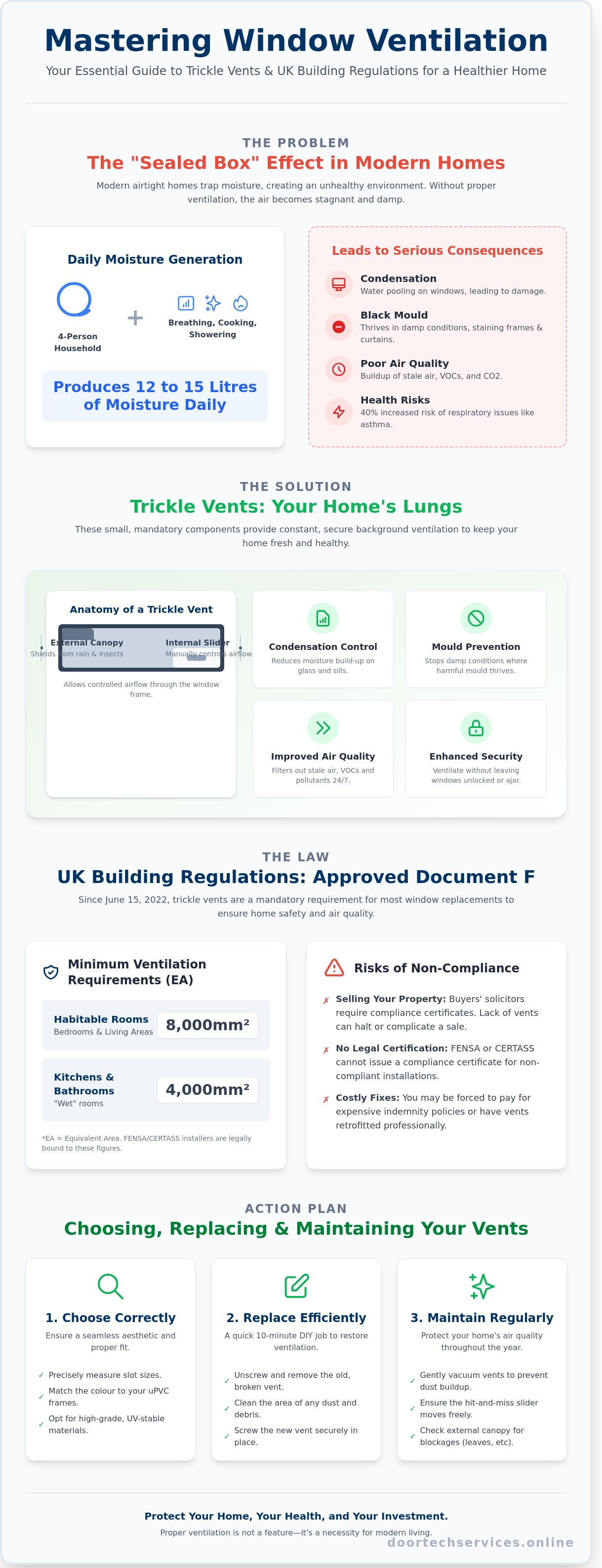
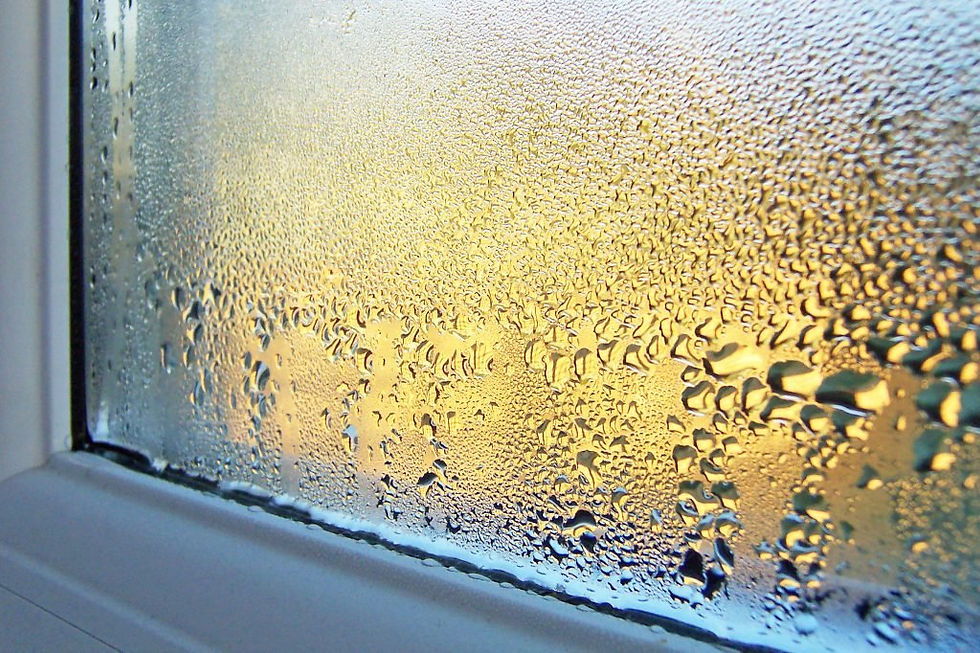
Condensation Control: They reduce the moisture levels that lead to water pooling on internal sills.
Mould Prevention: Constant airflow stops the damp conditions where black mould thrives.
Air Quality: They filter out stale air, volatile organic compounds (VOCs), and carbon dioxide.
Security: You get fresh air without leaving your home's entry points vulnerable to intruders.
The Anatomy of a Window Vent
A standard vent consists of two main parts. The external canopy acts as a shield, preventing driving rain and insects from entering the frame. Inside, the hit-and-miss slider mechanism allows you to manually open or close the vent. We always recommend choosing vents made from high-grade PVCu or aluminium with a focus on UV stability. This ensures the hardware doesn't become brittle or discoloured after five years of exposure to the British weather. Precision-engineered sliders move smoothly without rattling in high winds.
Why Ventilation Matters for Your Property's Health
Modern double glazing is designed to be airtight to save on heating bills. However, this creates a "sealed box" effect. A typical four-person household generates 12 to 15 litres of moisture every day through breathing, cooking, and showering. Without trickle vents, this water vapour has nowhere to go. It settles on cold surfaces, leading to structural rot and damp. Studies show that poor indoor ventilation is linked to a 40 percent increase in the risk of respiratory issues like asthma. These vents ensure your home breathes, protecting your family's health and your property's long-term value.
Understanding Building Regulations: Part F and Your Windows
On 15 June 2022, the UK government implemented rigorous updates to Approved Document F. These changes directly impact how you maintain and upgrade your home. These regulations remain the benchmark for 2026 standards, focusing on the health of both the building and its occupants. As homes become more airtight to reach nearly zero-energy building status, natural infiltration through gaps in old joinery disappears. Without trickle vents, this increased efficiency creates a "sealed box" effect that compromises indoor air quality.
Legal Requirements for Window Replacements
The historical "no worse than before" rule has been largely superseded for most residential window replacements. Under current 2022 mandates, if you replace your windows, you must provide adequate background ventilation. For most habitable rooms, such as bedrooms and living areas, this means a minimum Equivalent Area (EA) of 8,000mm². Kitchens and bathrooms typically require 4,000mm². FENSA and CERTASS installers are legally bound to these figures. They cannot issue a compliance certificate if your new windows lack the necessary ventilation capacity. You might find an exception only if you have a continuous mechanical extract ventilation (dMEV) system already installed, but for 95% of UK housing stock, vents are now a mandatory requirement.
Consequences of Non-Compliance
Ignoring these regulations creates significant friction when it comes time to sell your property. Buyers' solicitors now routinely request FENSA or Building Control certificates for any window work completed after June 2022. If your windows don't meet the Part F criteria, you may be forced to pay for a retrospective indemnity policy or, in worse cases, pay to have vents professionally retrofitted into your new frames.
The physical risks are even more immediate. Highly insulated properties trap moisture from cooking, bathing, and even breathing. Without consistent airflow, this moisture settles on cold surfaces, leading to condensation and black mould growth within 48 hours. If you're unsure whether your current setups are safe, contact us to evaluate your home's hardware and ventilation health. You can check your existing vents by looking for the "EA" stamp on the internal flap, which indicates the cubic millimetre airflow capacity. If your frames are completely sealed, you're likely falling short of current safety and moisture-control standards.
Choosing the Right Replacement: Sizes, Colours, and Types
Precision is everything when you replace window hardware. A poorly fitted vent creates whistling draughts and allows moisture to bypass your seals. You need a replacement that aligns perfectly with your existing frame prep. Standardisation exists, but you must verify your dimensions before purchasing to ensure a seamless fit.
Sizing Your Trickle Vent Correctly
Most UK homes feature three standard lengths: 250mm, 300mm, and 400mm. However, the external plastic cover length is secondary to the internal slot size. Open your window and measure the actual routered hole in the frame. This slot is typically 10mm or 12mm high. If your replacement is too small, it won't cover the aperture; too large, and it won't sit flush against the profile.
Airflow capacity is measured in Equivalent Area (EA). Following the June 2022 updates to Building Regulations Part F, most habitable rooms now require a minimum of 8,000mm² EA. Kitchens and bathrooms often require 4,000mm² EA. Always check the EA rating on the product packaging to ensure your home remains compliant with current ventilation standards.
Style and Colour Matching
Aesthetics matter for your property's kerb appeal. Don't settle for basic white if your frames are modern Anthracite Grey (RAL 7016) or traditional Rosewood. High-quality replacements use UV-stabilised, colour-fast uPVC. This material prevents the unsightly yellowing seen on cheap components after 24 months of sun exposure. For a professional finish, coordinate your vents with your PVCu window handles to create a unified look across the entire opening.
Surface-Mounted Vents: These sit on the face of the frame and are the easiest to retro-fit.
Link Vents: These feature an internal "link" mechanism that allows you to direct airflow upwards, reducing direct draughts.
Timber-Specific Vents: Designed with narrower profiles to suit wooden casements.
Acoustic Trickle Vents: Solving Noise Pollution
Standard vents can be a weak point for sound insulation. If you live near a busy A-road or a flight path, acoustic trickle vents are the solution. These units utilise high-density sound-absorbent foam internal linings. While a standard vent might only offer a 20dB reduction, premium acoustic models provide up to 42dB of sound attenuation. They block the noise of traffic while allowing fresh air to circulate freely. It is a simple upgrade that significantly improves your sleep quality and home comfort levels.
How to Replace a Broken Trickle Vent: A 10-Minute DIY Guide
Restoring your home's ventilation takes less than 10 minutes. You only need a screwdriver, a measuring tape, and a spirit level. Most trickle vents in the UK follow standard sizes like 300mm or 400mm. Measure your existing vent before purchasing to ensure the replacement covers the internal routing holes. Check the width of the slot; it is typically 10mm or 12mm. Precision at this stage prevents air whistles later.
Start by popping off the screw cover caps with a flat-head screwdriver. Be gentle. Scuffing the PVCu frame reduces the aesthetic value of your window. Unscrew the internal unit and pull it away. You will likely find a buildup of soot or dust. Use a damp cloth to clear this debris. A clean surface ensures a flush fit and prevents air leaks. Repeat this process for the external canopy. Dirty frames lead to 20% faster seal degradation over a 5-year period.
Step-by-Step Removal and Fitting
Align the new internal vent over the existing air slot. This routing hole must be completely obscured by the vent body. Hold the vent steady. Drive the screws into the frame. Stop once they feel firm. Over-tightening strips the soft plastic threads. This makes the vent loose and prone to rattling during high winds. Snap the new cover caps into place for a seamless finish. Repeat the process on the outside. Ensure the canopy faces downward to deflect rain away from the opening.
Troubleshooting Common Fitting Issues
New screw holes often miss the old marks by 5mm. Don't force the screw at an angle. Drill a fresh 2mm pilot hole instead. This prevents the PVCu from splitting under pressure. Use a spirit level to ensure the external canopy stays perfectly straight. A tilted canopy allows rainwater to bypass the internal baffles. Test the slider mechanism five times. It should move without resistance. If the slider sticks, loosen the mounting screws by a quarter turn. This relieves the pressure on the plastic housing and restores smooth operation.
Maintaining functional trickle vents prevents mould growth in 85% of high-humidity homes. If your window frame is damaged or the mechanism remains stiff, contact Door-Tech Services for expert window repairs to restore your home's security and airflow.
Maintaining Your Vents for Better Air Quality and Security
Trickle vents are small components that perform a massive job. They serve as the primary exhaust system for your home, yet they are often the most neglected part of a window assembly. Regular maintenance ensures that these vents continue to provide a healthy living environment while maintaining the structural integrity of your frames. Neglecting them leads to stagnant air, which eventually results in costly remedial work for damp and timber decay.
The 'Winter Myth': Why Closing Vents Is a Mistake
Many homeowners believe that sealing their vents during the winter months saves on heating bills. This is a significant error. Modern trickle vents are designed to provide controlled ventilation without creating uncomfortable draughts. Sealing them with tape or keeping them permanently shut traps moisture inside. An average UK household produces approximately 12 litres of water vapour daily through routine activities like cooking and showering. Without an exit point, this moisture settles on cold surfaces, leading to black mould growth.
Heating Efficiency: Dry air is easier and cheaper to heat than damp air. Keeping vents open actually helps your heating system work more efficiently.
The Partial Close: If you face extreme gale-force winds, use the internal flap to partially close the vent. Never seal it entirely.
Health Impact: Proper airflow reduces the concentration of indoor pollutants and allergens, which is vital during months when windows remain locked.
Cleaning and Unblocking Your Vents
Dust and debris are the primary enemies of effective ventilation. Over time, the narrow channels within the vent can become restricted. Use a vacuum cleaner with a soft brush attachment every six months to clear the internal tracks. This prevents the buildup of household dust that can trigger respiratory issues. Avoid using high-pressure compressed air, as this can dislodge the internal fly screens or gaskets.
External maintenance is equally vital. Check the external canopy for spider webs, grit, or organic debris that might block the intake. When cleaning PVCu frames, avoid harsh chemical solvents or bleach-based cleaners. These chemicals degrade the plastic over time, making the vent brittle and prone to snapping. A simple solution of warm, soapy water is sufficient to keep the hardware functioning smoothly.
Hardware Integration and Security
Your vents work in tandem with other window hardware to keep your home secure. A primary benefit of these vents is that they allow for "background ventilation" without the need to leave windows in the night-vent or partially open position. This keeps your locking points fully engaged, providing 100% security while you sleep or while the property is vacant.
Recognising when a vent has reached the end of its life is crucial for home safety. If the internal toggle feels loose, or if you notice visible cracks in the plastic housing, the component requires replacement. Brittle plastic can allow water ingress during heavy rain, which eventually rots internal wall finishes. Most vents have a service life of 10 to 15 years. If yours are older, or if they no longer stay in the fixed open or closed position, it is time to source a high-quality replacement to restore your home's protection.
Secure Your Home’s Air Quality and Compliance Today
Don't let poor ventilation compromise your property's safety or your family's health. Since the June 2022 updates to Building Regulations Part F, trickle vents are a legal requirement for most window replacements to ensure a constant flow of fresh air. Proper ventilation isn't just about legal compliance; it's a 100% effective method to prevent damp and mould from damaging your window frames and internal walls. If your current hardware is broken or discoloured, you can restore your window's performance in less than 10 minutes with a simple DIY fix.
As a specialist UK-based hardware supplier, we provide durable, UV-stable PVCu parts designed to withstand the British weather for 10 years or more. We pride ourselves on efficiency and offer fast national delivery to get your home back to its best without delay. Your property deserves the highest standard of protection and precision-engineered parts that last. We're ready to help you secure your home with components you can trust.
Take the first step toward a healthier, more secure home environment today. You've got the tools and the knowledge; now get the parts that guarantee a perfect finish.
Frequently Asked Questions
Do I legally need trickle vents in my PVCu windows?
You legally require trickle vents if you're replacing windows or building a new home under the June 2022 Building Regulations Part F. These rules mandate 8,000mm² of equivalent area for habitable rooms and 4,000mm² for kitchens or bathrooms. We ensure every installation meets these 2022 standards to prevent damp and mould growth. Compliance is mandatory to receive your FENSA or CERTASS certification upon completion.
Can trickle vents be fitted to existing windows (retrofitting)?
You can retrofit trickle vents to existing PVCu or timber windows by drilling through the frame or sash. Our technicians use precision jigs to create 10mm to 12mm slots without compromising the window's structural integrity. This process typically takes 30 minutes per window and provides a cost-effective solution for homes suffering from poor ventilation. It's a heavy-duty fix that avoids the £500 cost of a full window replacement.
Are trickle vents a security risk for my home?
Trickle vents do not pose a security risk because the external canopy is secured with heavy-duty screws and the internal opening is too narrow for tools. Intruders cannot access your locking mechanism through a standard 12mm vent slot. We install vents that meet PAS 24 security standards, ensuring your home remains a safe environment. Your safety is our priority, and these components are designed to be tamper-proof from the outside.
Do trickle vents cause cold draughts and increase heating bills?
Modern trickle vents cause negligible heat loss, typically adding less than £5 to your annual heating bill while preventing thousands in damp repairs. The controlled airflow is designed to be subtle, not a freezing draught. You can close the internal flap during extreme weather to maintain comfort. This small trade-off ensures your home's air quality remains high without sacrificing the efficiency of your double glazing.
How often should I clean my window vents?
You should clean your window vents at least twice a year to prevent dust and pollen blockage. Use a vacuum cleaner with a brush attachment to remove debris from the internal slot. If the vent is heavily soiled, wipe the plastic casing with a damp cloth and mild detergent. Regular maintenance ensures the 2,500mm² to 5,000mm² of airflow remains consistent and your warranty stays valid.
Why is my trickle vent whistling and how do I stop it?
Whistling usually occurs when high wind speeds pass through a partially closed vent or when debris creates a narrow air gap. Check for trapped dirt or insects in the external canopy first. If the noise persists, it may indicate a calibration issue with the internal flap. Adjusting the slider or replacing a worn seal often solves the problem instantly. We provide rapid repairs to restore your peace and quiet.
What is the difference between a canopy and a grille?
A canopy is the external hood that protects your window from rain and insects, while a grille is the internal component that controls airflow. The canopy features a downward-facing opening to deflect water even during 60mph winds. The internal grille allows you to manually open or close the vent. Both parts work together to provide a seamless ventilation path through your PVCu frame.
Can I replace just the internal part of the vent?
You can replace just the internal part of the vent if the slider breaks or the plastic discolours. Most internal units are 250mm, 300mm or 400mm in length and clip or screw into the existing frame holes. This is a simple, five-minute repair that costs as little as £10 for the part. Ensure you measure the screw centres accurately before ordering a replacement to guarantee a perfect fit.


Comments